IRGC Issues 'Dire Equation' Warning
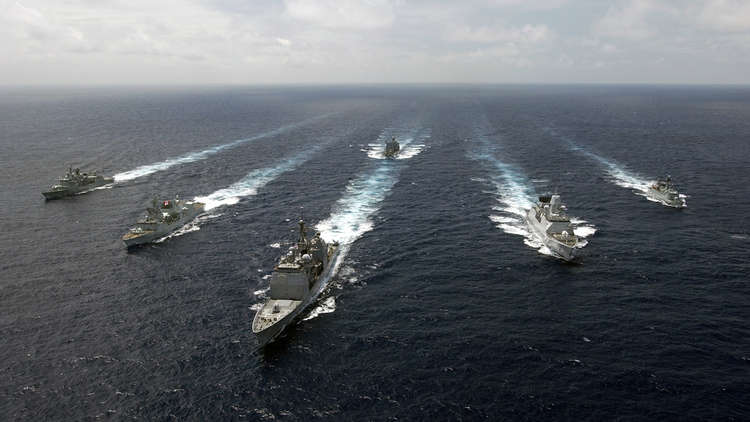
In a significant escalation of regional tensions, the Commander of the Islamic Revolutionary Guard Corps (IRGC) Navy, Admiral Alireza Tangsiri, issued a strong warning on Sunday, stating that targeting Iran's Kharg Island, a strategic energy hub, would lead to the creation of 'another dire and new equation' for global energy prices and distribution.
This warning followed US President Donald Trump's announcement on Saturday that US forces had targeted 'military objectives' on the island, confirming their complete destruction. Trump added that the oil infrastructure was not targeted in this strike but threatened that such an option could be considered in the future if Iran interfered with the Strait of Hormuz.
Reports quoted Trump as saying that the United States could destroy Kharg Island's pipelines in five minutes, threatening to strike again if Iran continued to obstruct freedom of navigation in the strait. These remarks have raised concerns about a widespread military escalation in the Persian Gulf region.
Read Also
- Global Economy Demonstrates Unexpected Resilience Amidst Mounting Geopolitical Shifts
- Global Economic Forum Concludes with Calls for Unified Action on Trade and Climate
- Global Summit Forges Path for Sustainable Innovation and Economic Cooperation
- Renewable Energy Sector Sees Unprecedented Growth Amidst Regulatory Hurdles
- Global Economic Outlook Amidst Accelerating Geopolitical Shifts
Iranian Reactions and Mutual Warnings
Iran, for its part, confirmed that the US attack on Kharg Island resulted in no civilian or military casualties. Iranian Foreign Minister Abbas Araghchi stated that 'occupying Kharg Island would be a greater mistake than attacking it,' reflecting the strategic sensitivity of the island.
Iranian President Masoud Pezeshkian, during a phone call with his French counterpart Emmanuel Macron, also indicated that recent attacks on Iran's Kharg and Abu Musa islands were carried out using the territories of some Gulf states, adding another layer to the diplomatic complexities in the region.
It is noteworthy that Iran's central 'Khatam al-Anbiya' headquarters had issued a strong warning to the United States and its allies days earlier, vowing a 'crushing and destructive' response to any attack targeting Iran's energy infrastructure and ports. Tehran threatened that in the event of such aggression, 'all oil and gas infrastructure in the region, which the US and its Western allies benefit from, would be burned and destroyed.'
Regional Escalation and Economic Impact
These developments coincide with escalating reciprocal shelling between Iran and Israel, as Iranian missile attacks on Israeli areas have resumed, leading to growing concern in the region. Oil prices rose by approximately 3% as conflict threats continued to loom over vital export facilities, with the US-Iran war entering its third week.
Related News
- Rome Blooms with 'Roman Spring Among the Aqueducts' Festival
- How Iran's 'More with Less' Strategy Surprised the US in the Gulf
- Victor Font Congratulates Joan Laporta on Resounding Barcelona Presidential Victory: Navigating the Election Landscape and Future Challenges
- Ukrainian Armed Forces Seek Recruits for Reconnaissance Battalion After Heavy Losses
- Middle East Conflict: Limited Diplomatic and Strategic Gains for Beijing Amidst Regional Tensions
In a related context, the Wall Street Journal reported, citing US officials, that the Trump administration plans to announce the formation of an international coalition to escort ships through the Strait of Hormuz, in an attempt to ensure freedom of navigation. The US President has called on regional countries to participate in the military confrontation against Iran, considering the protection of navigation in the strait a global economic interest.
These events unfold amidst a climate of severe tension in the region, with growing fears of the conflict widening and its grave impact on regional stability and the global economy, particularly concerning energy supplies.