
United States - Ekhbary News Agency
US President Threatens Retaliation Against NATO Allies; London and Paris More Open to Military Solution, Brussels Looks to UN for Black Sea-like Initiative
Escalating geopolitical tensions have taken a new turn as the US President has reportedly threatened retaliatory actions against certain NATO member states. This potential move stems from ongoing disagreements concerning defense spending contributions and burden-sharing within the transatlantic alliance. The threat arrives at a critical juncture, as Western nations strive to present a united front against a backdrop of increasing global security challenges, thereby subjecting the alliance's cohesion and solidarity to a significant test.
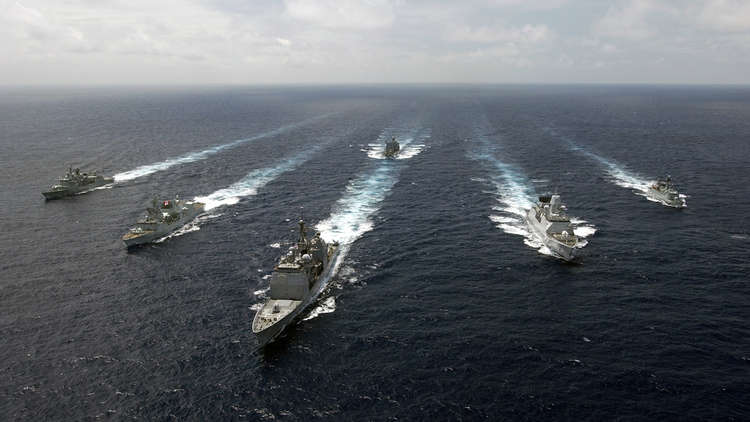
In a related development, both the United Kingdom and France have indicated a heightened willingness to consider military options as potential resolutions to the prevailing crisis. Reports suggest that both nations are seriously evaluating the possibility of employing force, or at least the credible threat of it, as a means of deterrence or conflict resolution. This stance may reflect a growing concern among these key European powers regarding the efficacy of economic sanctions and purely diplomatic solutions in the current complex environment. Such positions could be driven by a deep-seated understanding of the necessity to maintain regional and international stability, coupled with a desire to project resolve against potential threats.
Read Also
- The Accelerating Digital Transformation and Its Multifaceted Impact on Global Economies
- Global Economic Resilience Amidst Geopolitical Shifts: Challenges and Opportunities
- Global Economy Demonstrates Unexpected Resilience Amidst Mounting Geopolitical Shifts
- Global Economic Forum Concludes with Calls for Unified Action on Trade and Climate
- Global Summit Forges Path for Sustainable Innovation and Economic Cooperation
Conversely, Brussels, the administrative heart of the European Union, is adopting a distinct approach, focusing its efforts on leveraging the United Nations as a primary platform for pursuing peaceful and diplomatic resolutions. The European Commission is reportedly working towards proposing a new initiative, drawing inspiration from the successful implementation of the Black Sea Grain Initiative. The objective is to establish a similar mechanism designed to facilitate dialogue and broker agreements that ensure stability and prevent further escalation. This trajectory underscores a conviction that multilateral solutions, operating under the auspices of international organizations, are the most effective and sustainable means of addressing the intricate issues confronting the global community.
An analysis of the current situation reveals potential divergences within Western alliances, not only between the United States and Europe but also among European nations themselves. While Washington appears inclined towards economic pressure tactics, London and Paris seem more amenable to contemplating military contingencies. Simultaneously, Brussels is attempting to reassert its role as an active mediator by engaging UN mechanisms, which could represent an effort to recalibrate European foreign policy and bolster its standing on the international stage.
The US President's threats of sanctions against NATO members inevitably raise questions about the future trajectory of the alliance. Will these internal disagreements weaken its internal solidarity, or will they serve as a catalyst for a re-evaluation of roles and responsibilities within the alliance? Historically, NATO has demonstrated a capacity to navigate internal crises, but the current set of challenges appears particularly intricate, especially against the backdrop of rising global geopolitical tensions.
Furthermore, the openness to military solutions expressed by the UK and France could carry significant ramifications, particularly if not underpinned by broad international consensus. Such an approach might inadvertently trigger a new arms race or lead to unintended escalations. Therefore, the diplomatic endeavors spearheaded by Brussels, seeking UN involvement, might represent the most prudent pathway to avert a slide into wider confrontations.
The Black Sea Grain Initiative stands as a notable example of successful international cooperation under exceptional circumstances, significantly mitigating a global food crisis. The potential application of lessons learned from this experience to other contexts could indeed open new avenues for conflict resolution. However, the ultimate success of any such initiative will critically depend on the political will of the involved parties and their capacity to transcend narrow self-interests in favor of the collective good.
Related News
- Environmental crises add to Iran's mounting troubles
- Trump's Hormuz Naval Coalition: Ambitious Plan Faces Significant Risks and Obstacles
- Europe Rejects Trump's Hormuz Intervention Call: 'Not Our War'
- Google Agrees to Pay $135M in Huge Android Data-Harvesting Settlement
- UN Warns of Persistent Legal Inequalities Hindering Women's Rights Ahead of International Day
Ultimately, these recent developments reflect a period of profound uncertainty and complexity in the global geopolitical landscape. The ability of leaders to manage these internal disagreements and foster coordinated action will be pivotal in shaping the future course of international stability and security. The central question remains: Will diplomacy prevail over threats of military action and retaliatory sanctions, or is the world bracing for a new era of confrontation?