
Libya - Ekhbary News Agency
Saif al-Islam Gaddafi: A Life Trajectory in the Heart of Libya's Political Storm
After a life marked by profound transformations and winding paths, Saif al-Islam Gaddafi, son of the late Libyan leader Muammar Gaddafi, remains a pivotal and controversial figure in the Libyan political scene. From being seen as an architect of reform and a potential heir to his father, through years of arrest and disappearance, to his re-emergence as a presidential candidate, his story reflects the complexities of the Libyan conflict and its aspirations.
Born in 1972, Saif al-Islam received his education in Libya and then in Europe, where he earned a Ph.D. from the London School of Economics. In the late 1990s and early 2000s, his star began to rise within the Libyan regime. He did not hold a major official position, but he was seen as the liberal face of the regime, credited with efforts to open Libya to the West, launch reform initiatives, and mediate sensitive international issues, such as compensation for Lockerbie victims. He was promoted as the architect of a post-Gaddafi Libya, with a vision for a more open society and a free-market economy.
Read Also
- Turning Event Highlights into Instant Recap Videos: Seedance 2.0 for Conferences and Trade Shows
- Gaza Strip Plunges Deeper into Humanitarian Catastrophe: Urgent Global Intervention Needed
- World Defense Show 2024: Saudi Arabia Bolsters Leadership in Military Industries and Defense Localization
- Global Economic Outlook: Navigating Uncertainty Amidst Geopolitical Shifts and Inflationary Pressures
- Global Leaders Convene to Tackle Climate Crisis and Economic Recovery Amidst Geopolitical Shifts
However, this promising trajectory collided with a bitter reality in February 2011, when the spark of the Libyan revolution ignited. Saif al-Islam stood firmly by his father, fiercely defending the regime and warning of a bloody civil war if protests continued. His image transformed from a potential reformer to one of the regime's staunchest defenders, costing him much of the international and local support he had enjoyed.
With the fall of Gaddafi's regime in October 2011, Saif al-Islam disappeared from view, only to be arrested later in November of the same year by Zintani fighters in southern Libya. A new phase of his life began behind bars, where he faced charges of war crimes and crimes against humanity. He was sentenced to death in absentia in Tripoli in 2015, while still held in Zintan, which refused to hand him over to central authorities or to the International Criminal Court, which had issued an international arrest warrant against him.
His detention in Zintan continued until his release in June 2016, under a general amnesty law issued by an interim government in eastern Libya. Since then, Saif al-Islam has preferred to remain out of the public eye in Zintan, the city that became his refuge under tight security, fearing arrest or targeting by warring factions.
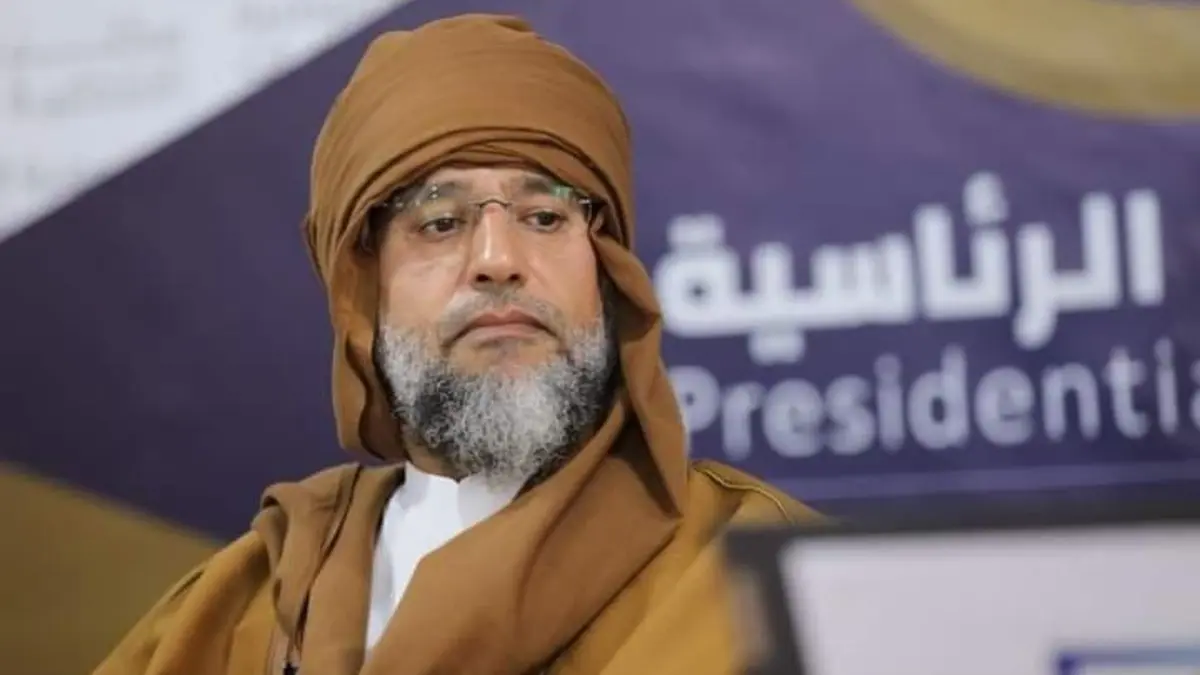
After years of absence, Saif al-Islam unexpectedly returned to the political forefront in 2021, announcing his candidacy for the presidential elections scheduled for December of that year. This announcement sparked mixed reactions; while some saw in him hope for restoring stability through a strong figure capable of uniting Libyans, others considered it a provocation to the feelings of the victims of the 2011 revolution and a return to a dark page in Libya's history.
His election campaign relied on a discourse focused on national reconciliation and rebuilding the fractured Libyan state, but his political ambitions once again clashed with the reality of Libyan divisions. After a period of legal and political controversy, the presidential elections were ultimately canceled, temporarily closing the door on Saif al-Islam's political project, on which he had relied for a return to power.
Related News
- Nvidia Reportedly Planning RTX 5050 with 9GB VRAM and RTX 5060 with Cut-Down GB205 GPU
- Iran Declares Hormuz "Closed to Enemies" Amid Escalating Conflict, Blasts Islamic Nations' Silence
- International Powers Warn Against Major Israeli Ground Offensive in Lebanon Amidst Regional Escalation
- Truck Driver Flees Horrific Accident, Cites Fear of Angry Mob
- The Oscars' Political Stage: Five Defining Moments in Academy Awards History
Saif al-Islam Gaddafi remains both an enigmatic and influential figure. While his political fate remains uncertain, his presence recalls Libya's heavy past and raises questions about its future. Can a controversial figure like him play a constructive role in uniting the country? Or will his legacy remain an obstacle to any attempt at comprehensive national reconciliation? The Libyan scene awaits answers to these questions, with Saif al-Islam remaining in the shadows, observing developments, and perhaps planning his next moves.